Assessment
Water is getting into the boat at different locations:
Starboard traveler. This is attached to the deck with 28 6mm stainless steel through bolts. At some point the deck had gotten a new anti slip coating, it appears that the travelers were not removed for that job. So it is basically 40 years old. There are some visible cracks in the gelcoat, but most water probably enters through the bolt holes. This is one of the reason for the electrical system being so bad. The water entering through the starboard traveller dripped on the electrical switchboard and electrical components.
Fixing the Leaks, Step by Step
Starboard Traveller and Port Traveller
The starboard traveller was the most urgent one since the water entering here dripped on the electrical component compartment at the chart table. No point in starting with the electrics without having fixed the leaks first. Joel did that with the boat at the mooring. He removed the traveller, filled all gaps and the screw holes with marine epoxy, added a layer of fiberglass on top, primed and painted it and then re-attached the traveller with plenty of Sikaflex.
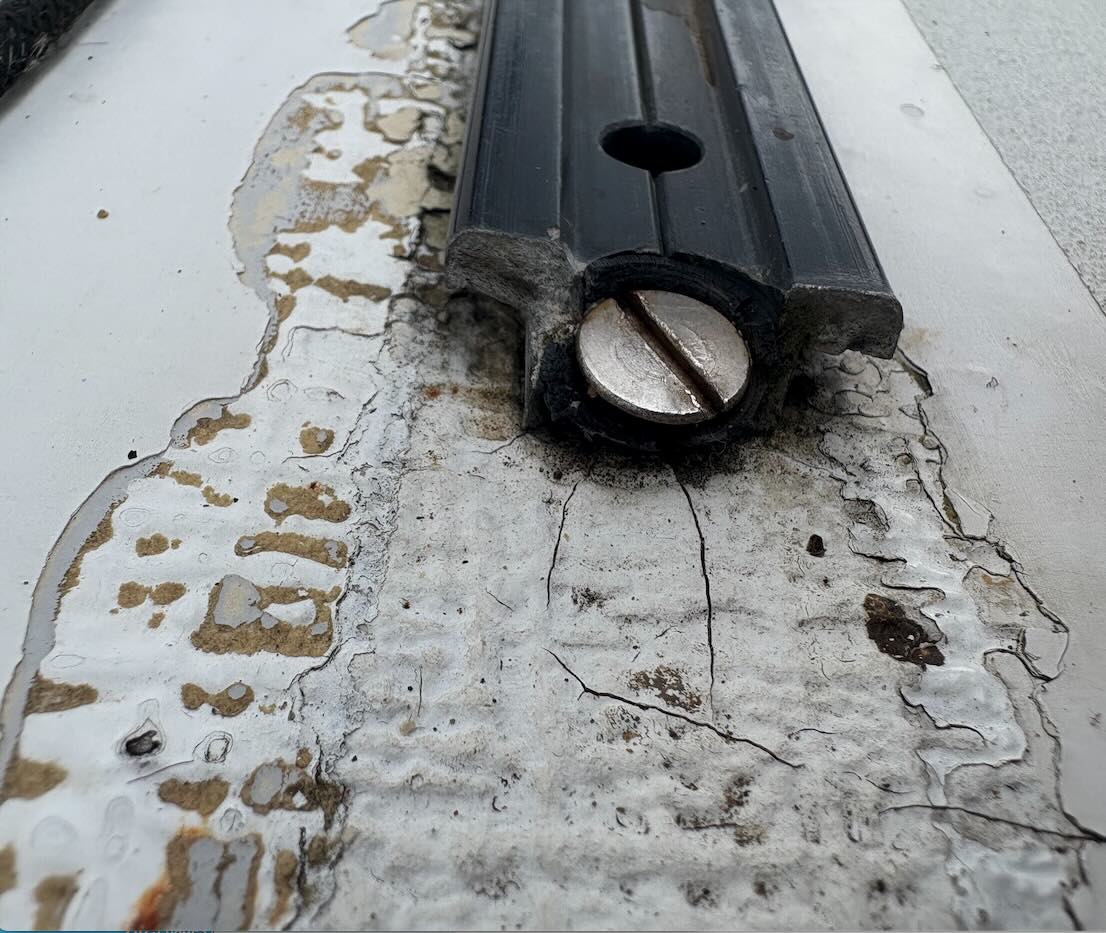
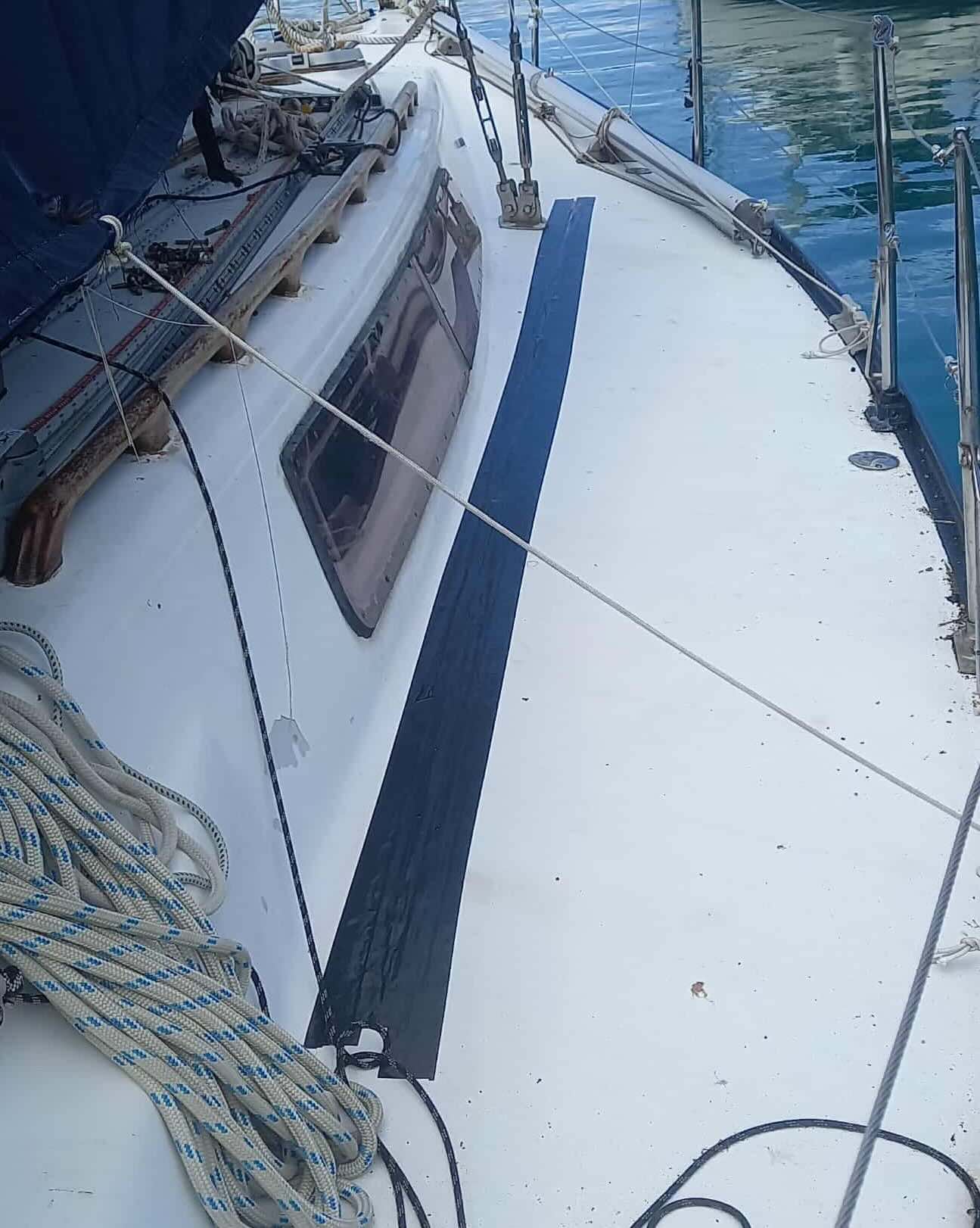
A few weeks later he also fixed the port traveller the same way. This was in November 2025.
In July 2026 during the southwest monsoon season with day long heavy rains it turned out that the repair had not fixed the leak in the boward part of the traveller. In a 12 hour timeframe 2.5 liters of rainwater were caught in a bucked placed below the leak. This needed further attention.
Main sheet traveller
According to the care taker this was a source of leakages. However, when I took the aft cabin apart and removed all the panels, including the fiberglass mold that cobered the main sheet traveller screws, ther did not seem to be a leak there. I observed it over two weeks, with rain coming in the direction from aft, so exposing the traveller directly to the rainwater.
Winches
The main winches on the starboard side are also attached with through deck bolts. All of them were leaking too. In addition, the deck at the locations of the main winches had given way a bit to the permanent strain of the ropes and bent slightly forwards. One could also see the winches and deck move under load. We addressed this by removing all winches, sanding the secondary paint (the boat had been re-painted at some time – the paint and filler underneath is chipping off at some places), adding several layers of fiberglass reinforced laminating epoxy and then filling, priming and re-painting the area. In the process the holes for the screws attaching the winches, partially enlaged from the strain, were also filled, and then new holes drilled. The reinforment plates underneath the deck were also cleaned and strengthened. Then the winches were mounted back with Sikaflex as sealant.
The main winch on the port side was not included in the initial work because it was not mounted above the saloon but on top of the galley cabinet. On first inspection it appeared OK. However, in June 2025 during heavy rains without the canvass covering the boat usually when moored, the compartment filled up with greenish water (copper corrosion?). It turned out that the winch leaked too. At the same time a puddle with greenish water was found in the aft cabin, pretty far from the galley cabinet. lt appeared that after entering the water travelled in the sandwich deck with the balsawood core and exited whereever the lower fiberglass layer had a leak. Which could be quite far from the original deck leak.
The port side winch was mounted with 5 bolts of which two were leaking through the hull. Underneath the winch were 5 more holes from a previous winch. They were just filled with silicone. The deck at this area also had a long crack, through which water could have entered.
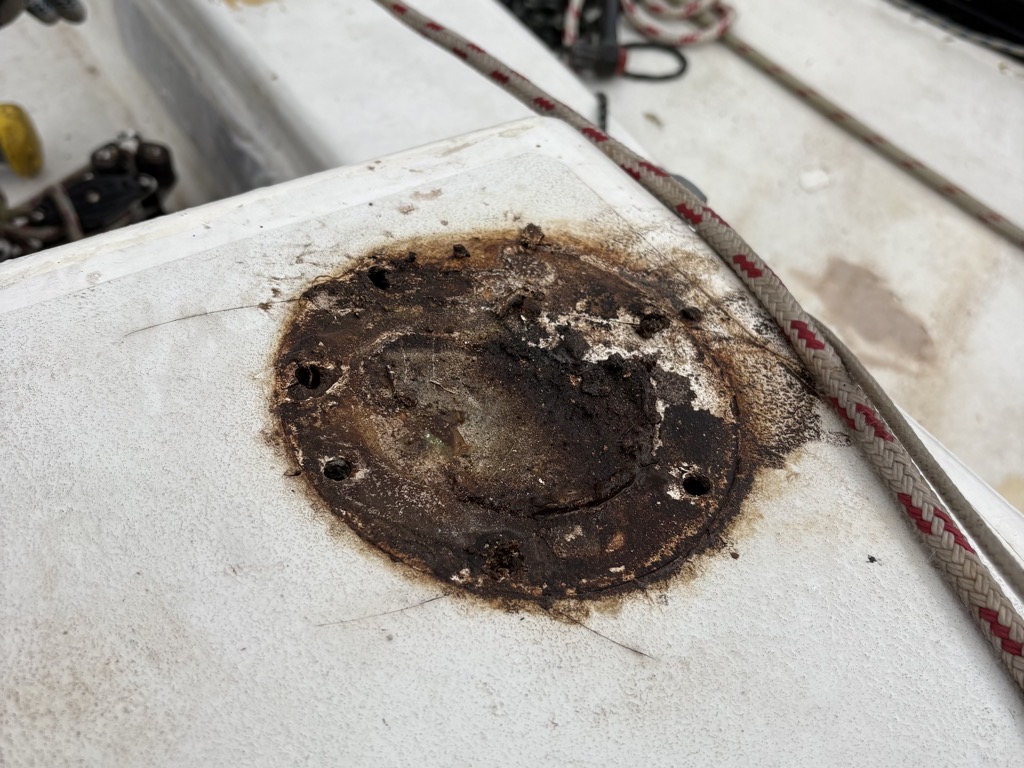
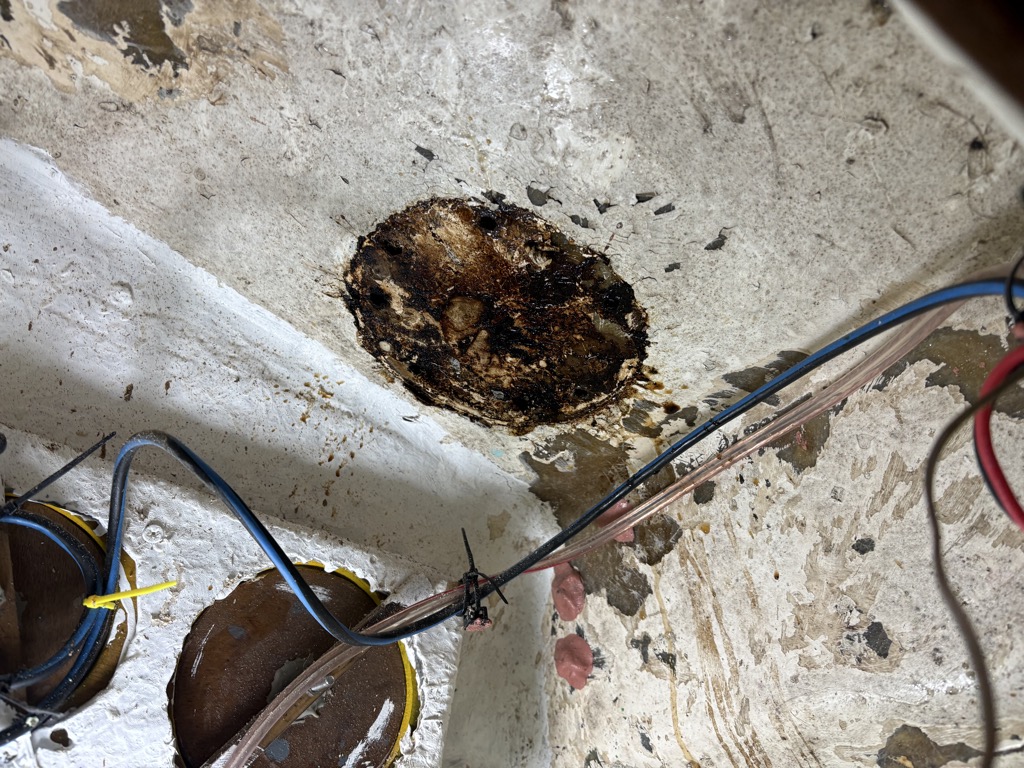
At the Watercraft Mooring I fixed the winch after re-inforcing the deck with fiberglass, laminating epoxy and filler similarly to above. It was difficult because it was always raining. I had to work under a canvass and use the heat gun to dry surfaces before applying epoxy.
Hatches
All three hatches were leaking. Worst was the saloon hatch, when waves came over the deck a small waterfall came down from the hatch. The head hatch had less water volume, but a continuous flow. The bow cabin hatch was moist, but not leaking much.
Windows
All windows were leaking. Three Lewmar windows that can be opened in the cockpit, the small window at the galley that can be opened when needing fresh air, and the four fixed windows at the sides of the cabin. The cockpit windows were permanently sealed with lots of silicone and could not be opened anymore, indicating that the moosrubber gaskets were all gone.
Mast Boot
There is a big gap between the mast foot boot and the deck. Water is entering and running down at the inside along the kieled mast.
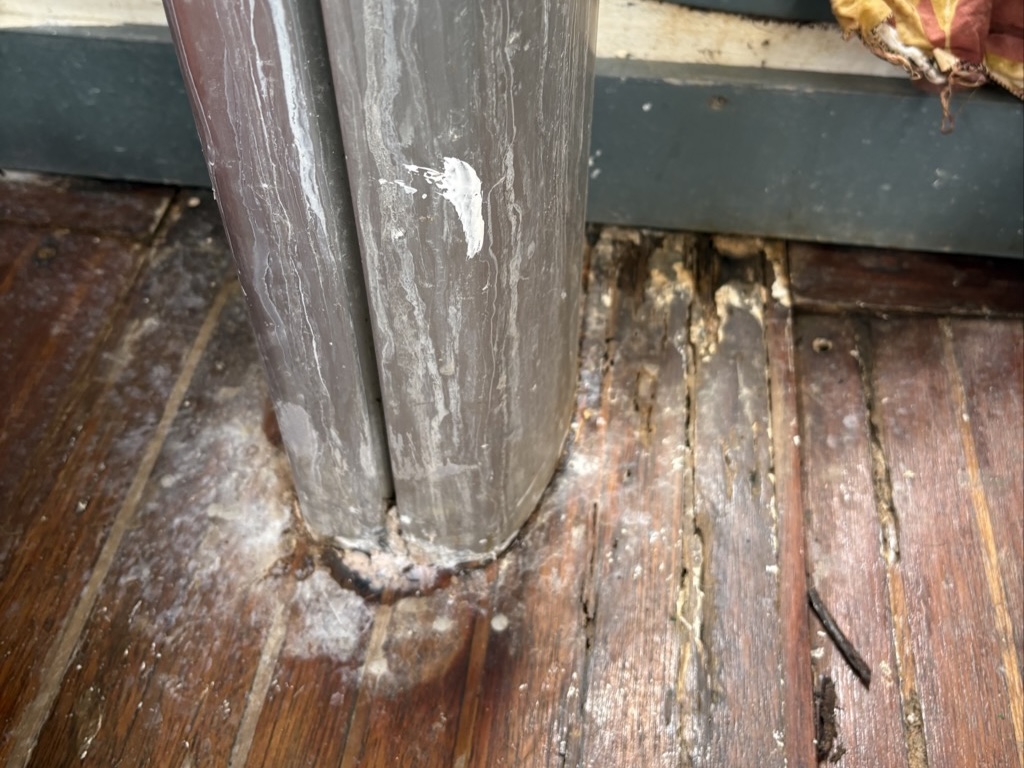
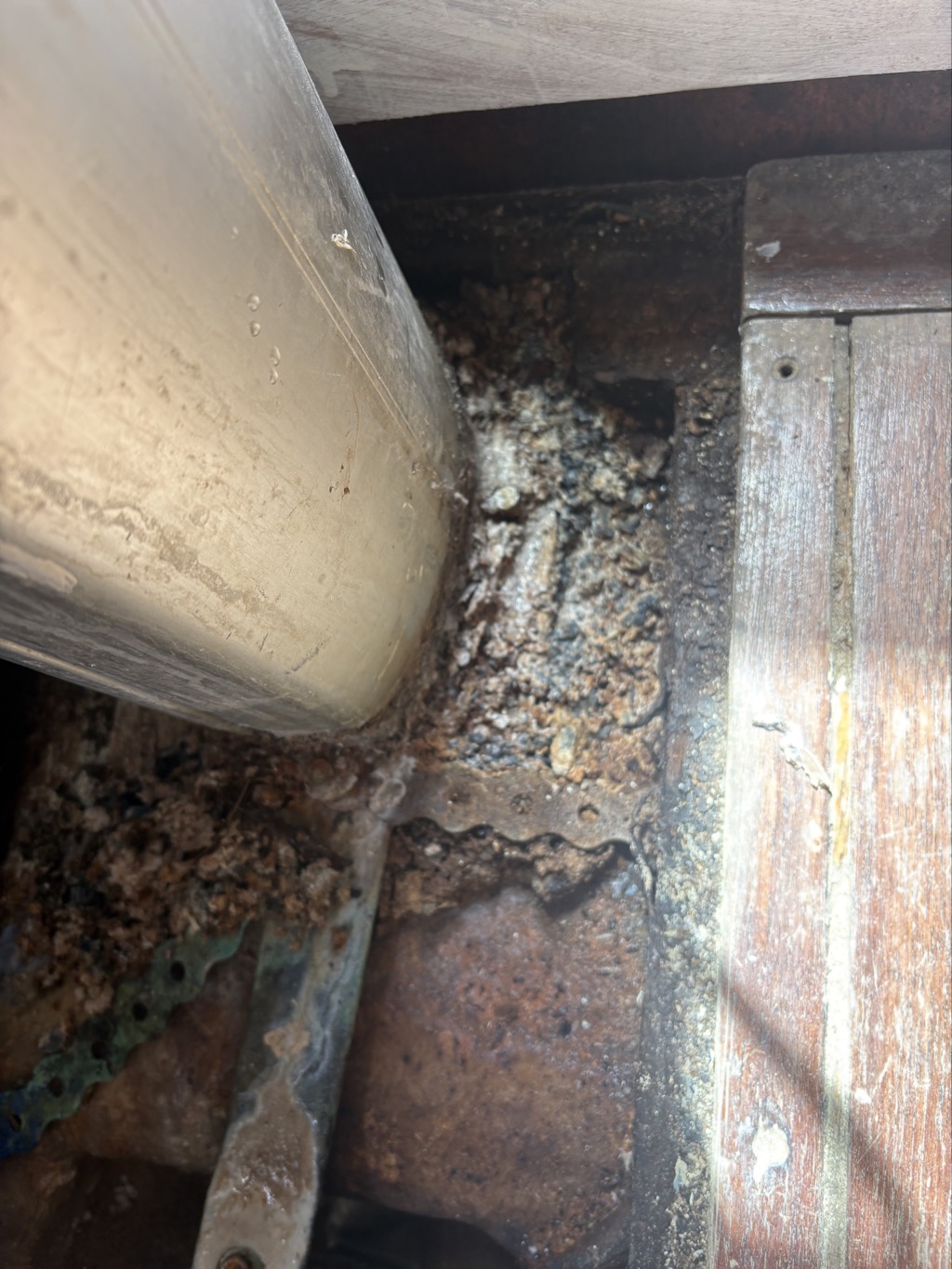
Shroud fittings
This were major leaks too. Not very without removing the ceiing panels because they led the water somewhere else.
Rear Railing mounting points
The back railing has the frame for the solar panels attached to it. It was not deigned for this additional load. The forward fittings were very loose and therefore leaking a lot.
Cable canal
On the starboard side there is a canal for cables molded into the deck with fiberglass. This transported water that entered somewhere in the front and leaked it at the starboard bunk and in the section behind the main switchboard. Very bad because it threatened the new electrical components.
Cockpit storage compartments
The laminate serving as the floor inside the storage compartments had severe cracks. Water entering the storage compartments was sitting there (drainage holes far too high) and then entering the aft cabin. This had been fixed before from the inside, but as long as the water gets into the fiberglass-balsa wood – fiberglass sandwich fixing inside leaks would not be sustainable.
Instrument panels in Cockpit
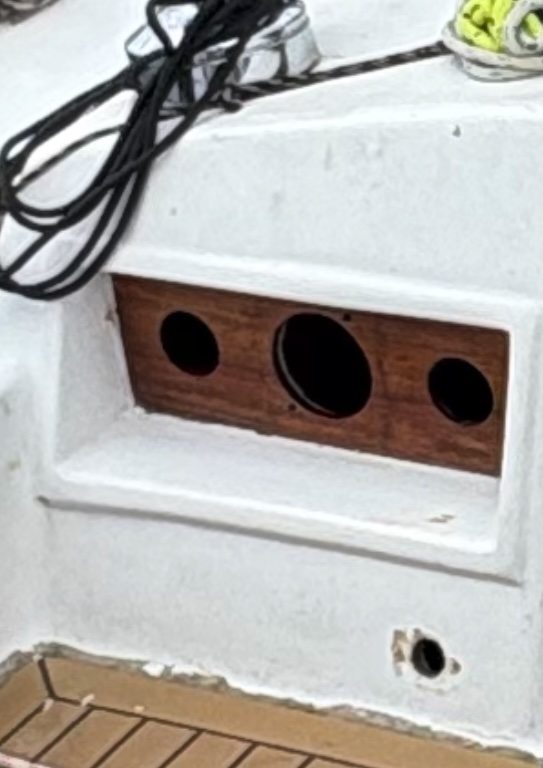
Six holes where the instruments used to be.