Purchase and Assessment
 | In 1969 it was the fastest serial motorcycle |  |
Part 1: Purchase and Assessment; Part 2: The Restoration; Part 3: Improvements
BMW R75/5, an all time classic
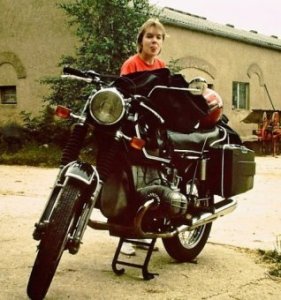
In 1989, after some years not owning a motorcycle, I bought a twenty year old second hand BMW R75/5. I used the Gummikuh (rubber cow) daily around Stuttgart. The longest trip I took it on was to Paris to visit a friend from the US, who was spending his holiday there. I sold the Gummikuh a few years later in dire need of money.Twenty years later I bought another one in the Philippines, still running but in very bad condition.
in Germany

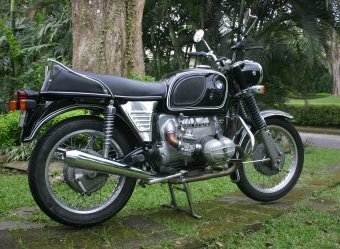
The restoration took almost two years and was declared completed in January 2011.

Restoration Summary
The pictures below show that progress of the restoration, which stretched over almost two years because of repeated problems with spare part purchases and repair jobs of components.


October 2009, the engine completely re-built, frame re-painted but still waiting for parts


30 January 2010: While still waiting for the instrument in the lamp the R75 is assembled, the engine tested and the carbs adjusted.

January 2011

reconditioned carburetors.

Finding a “Gummikuh” in the Philippines
In 1993 I had tried to import my BMW R80GS. to the Philippines but failed due to red tape and lack of clarity about process and cost. I tried again in 2004 but in addition to the shipping cost I would have to pay 100% tax, 30,000 to 50,000 Pesos (around 1,000 US$) for registration and an unspecified amount of grease money to various individuals who would try to take advantage of the situation. Not worth it. I subsequently bought a locally produced Honda XR200 and an imported Yamaha TTR250, which is excellent for off road trips on bad Philippine roads. So why considering a big bike at all? There are good reasons to get a bigger classic bike, even in the Philippines:
- You can’t go fast on Philippine roads because road conditions are really bad and traffic is very dangerous. Consequently a big classic bike with a big engine is ideal for relaxed cruising while Ducatis and Japanese rice rockets are pretty useless.
- On the few tollways the country has motorcycles below 400 ccm are forbidden.
- The fund and show factors.
So I was always on the look out for a BMW or a Harley. in 2009 I finally found several 2-valve BMWs that appeared affordable on http://www.motorcyclephilippines.com. I had a look at a BMW R100/6, which was according to the owner previously owned by a major of a major of a southern island. Despite the fact that the said major had some reputation for driving around with his motorcycle gang members and sometimes shooting at criminals taking the law in his own hand, the bike was in pretty bad condition, leaking oil in many places. In June 2009 there was a Triumph Bonneville advertised but I did not get any response from the seller when I emailed him. Later I found out that the owner was on trip. Shortly after I found a BMW R75/5 close by in Pagsanjan and had a look at it. It looked OK, was mostly original (so I thought) and the engine was running reasonably OK in idle and could be kick-started easily.

I thought it would not be a bad purchase for a almost 40 year old bike and agreed to buy it, intending to overhaul the pistons and cylinder heads and do some other minor work on getting it to original condition. I figured that although the old BMW was quite expensive (in Europe I would have paid a third of the price), if I would put another 1,000 US$ in some repairs, it would still be a lot cheaper than importing my bike and I would have two BMW bikes instead. The plan was to sell my Yamaha TTR250 as soon as the BMW is running well. How little did I know about the real condition of the BMW! It will take a while.
Driving home and a first assessment
During the test ride it drove OK, showing the typical local bike symptoms, the front brake handle could be pulled straight to the throttle lever without much breaking effect, the carbs were grossly out of sync, accelerating did not work because of a replaced throttle assembly and a screwed up gas cable, the engine did not rev well, but it seemed to have lots of torque at idle speed and the frame and gearbox seemed OK. Because someone had fitted custom shocks the back suspension was awfully stiff and each speed bump sent shock waves straight to my backbones.
When driving the cow back to Los Banos the first signs of serious engine damage became apparent. There was the occasional “clunk” sound from the engine, indicating a broken crankshaft bearing. At higher revs the engine lost power and was misfiring, and the valves made a hell of a noise once the engine got hot. Not so good. Anyway, I had a plan to overhaul the engine, so no big problem – I thought.
Before my home leave I took half day off work to dismantle the bike and identify broken parts, after all I was going to Germany where there are still lots of spare parts for the old cows. I already checked my previous contacts for spare parts from theBMW R25 restoration job, and found out that in the meantime even more small companies in Germany have specialized on providing spare parts and even re-engineered components for the old 2-valve BMWs at reasonable prices.
But then, taking the bike apart was a bit shocking, I should have expected it because it always happens when I get involved with a newly purchased bike in the Philippines. As usual countless local mechanics had tinkered with the bike and made most serious modifications:
Engine and gearbox
- The centrifugal timing advance was welded onto the camshaft. The engine could not be taken apart without further destroying the device and the camshaft
- Crankshaft bearings and connecting rods bearings were worn
- Exhaust threads are worn completely (which is sort of normal for a bike of this age)
- Kick starter hung when operated and had to be pushed back manually
- Main crankshaft seal leaked into the clutch compartment
- Gearbox leaked at several places
Frame and suspension
- Some metal triangles were welded to the frame to serve as seat holders for the third party single seat
- The rear shock absorber bottom point was moved backwards. Probably because it is supposed to look cooler than a shock that runs straight down.
- The battery holder was missing, instead the battery was placed loosely on a fiberglass fitting. One of the acid replacement openings was open, frame parts were corroded from leaking acid.
- The wheel bearings were replaced, all fittings to adjust the bearings were taken out.The back wheel was ruined.
- The swing arm bearings were also not original. The swing arm was very stiff.
Others
- Rear Handle and throttle mechanism was replaced and did not work properly, in fact did not work at all.
- Switches in head light and at handle broken or missing and replaced with automotive switches
- No air filter installed
- No choke mechanism
- The electrical system was completely screwed, no part original. Two diodes in the diode plate were burned, blinkers did not work, a complete mess.
I started realizing that there was lot of work ahead of me.
More than 200,000 km?
According to BMW Sherb, who took the engine apart after we had shipped it to Germany, it had probably done a lot more than 200.000 km. Below are a few pictures of the wear.
The crankshaft

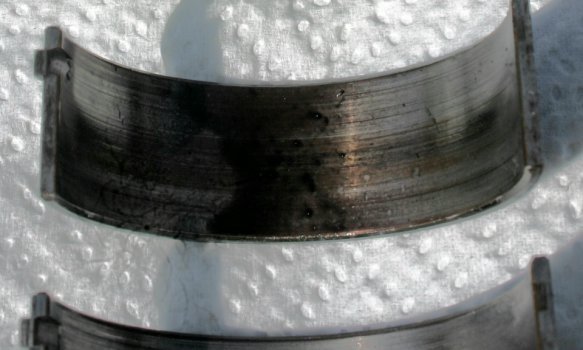
The major reason why I wanted the engine fixed was the “clonk” sound coming from the engine housing when the engine was hot, which indicated worn crankshaft bearings. In the old days one would have brought the crankshaft for grinding the bearings off to the next size and fitted oversize bearing seats, but because labor is so expensive in Germany it was cheaper to buy a new crankshaft.

Crankshaft bearing seats

Camshaft


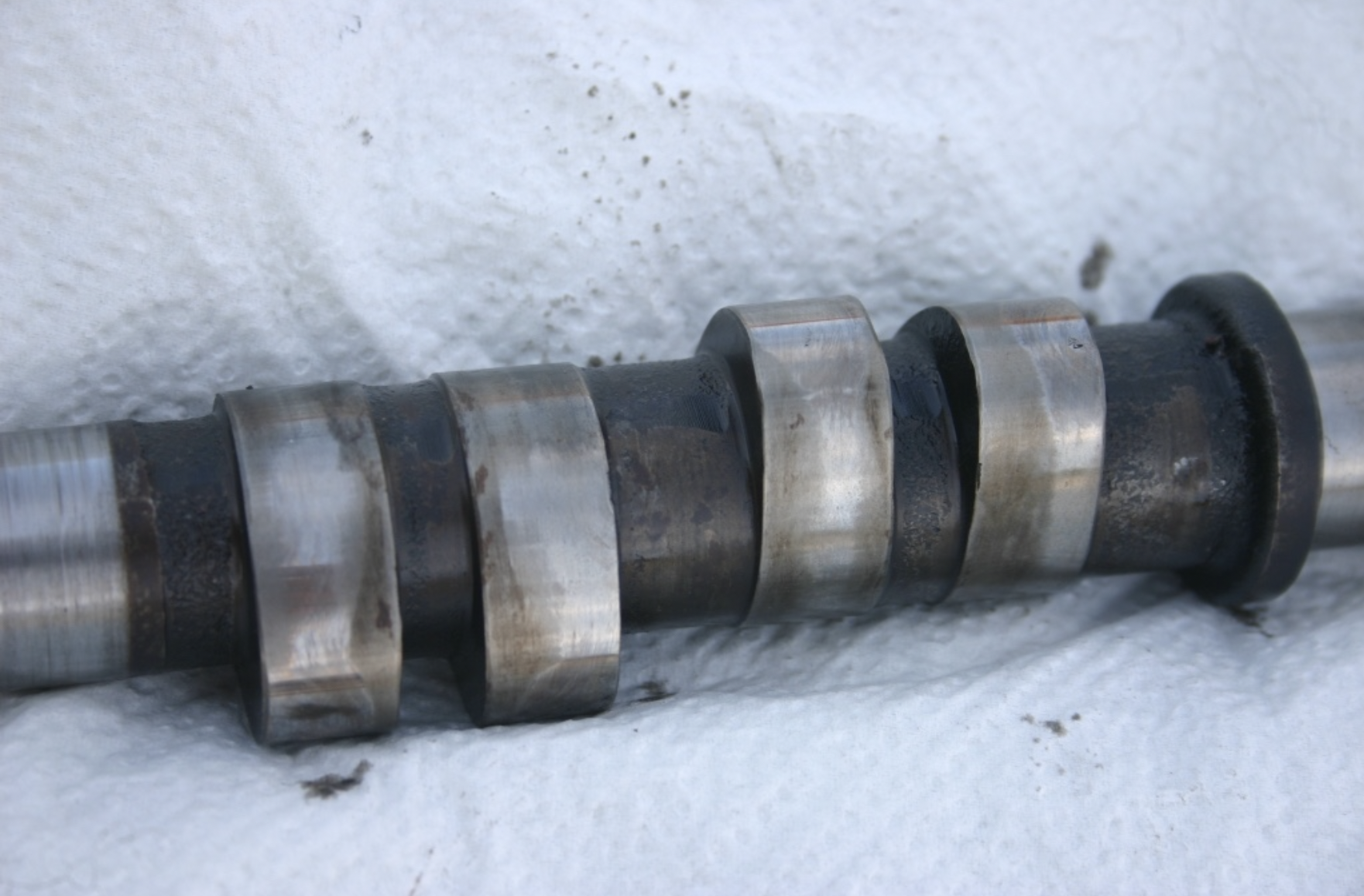
The centrifugal timing advance was welded onto the camshaft. I had to use a grinder to remove it. It did not make sense to consider repairing the camshaft because the the cams were worn anyway but it shows how the local mechanics fix things. Instead of trying to do a proper job they usually use quick fixes that might help in the short run but cause problems in the future.
Piston rods

The oil pump
As expected considering the overall wear of the engine the oil pump also had signs of heavy wear and needed to be replaced.
The electrical system

This was one big mess. After finding all the problems it was a miracle to me how the motorbike could run at all.
Part 2: The Restoration