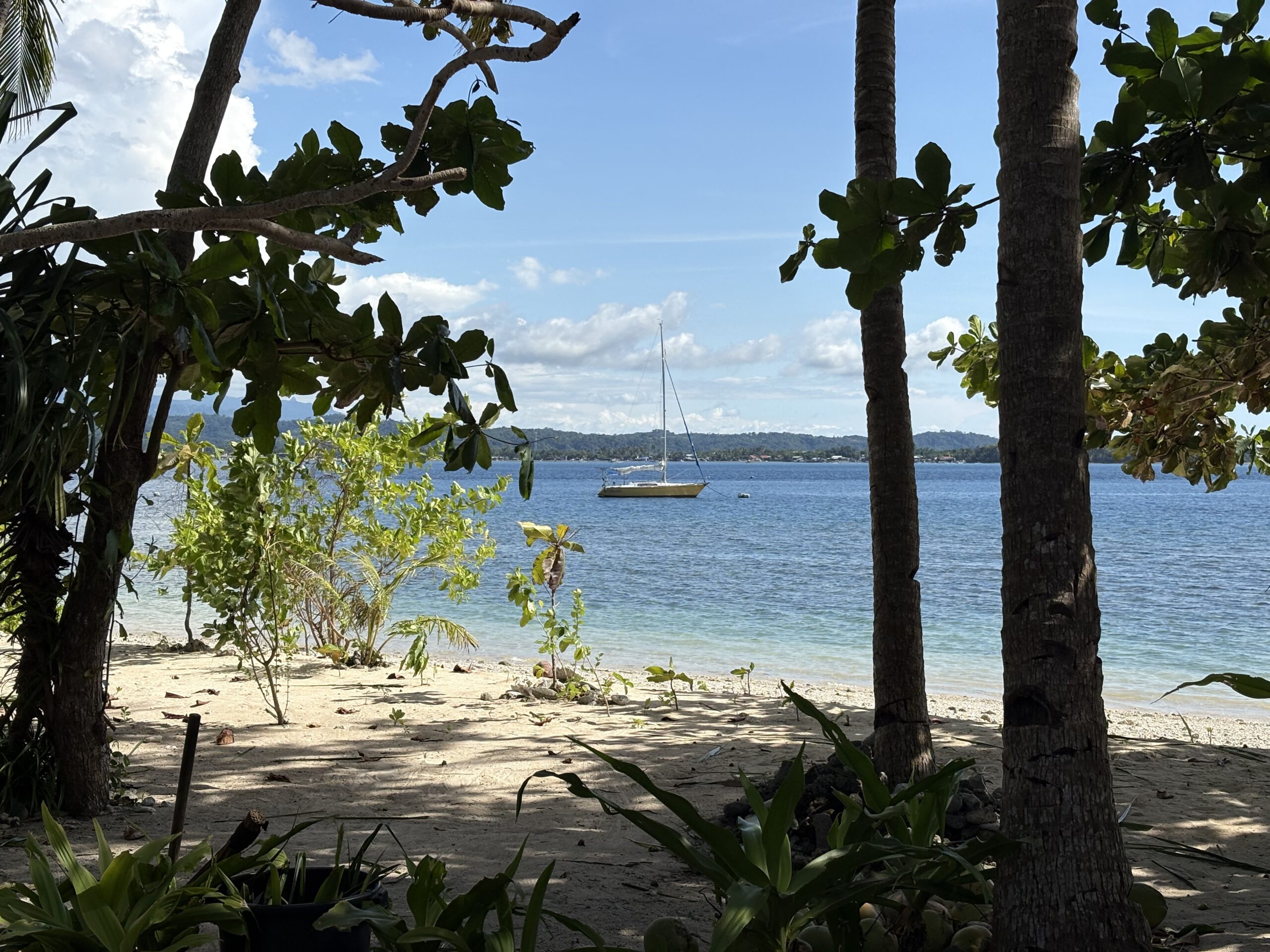
Having a much bigger boat, what could possibly go wrong this time..
So after just having purchased IRResistible, the idea was that we could fix up the most important things in the boat and, to baptize her in the Gummert fashion, sail her to our favorite Pandan Island for Christmas and New Year. After several attempts we had done the same with Magayon II several years back, which had ended up being shipwrecked on the Pandan Island house reef during a tropical. And then Miriam staying 3 months on the island to take care of the boat until weather had improved. Now we have a bigger boat with a more powerful engine, so what could go wrong this time?
Martin went to Puerto Galera one week before Christmas to continue working on the boat electrics and to get three basic functions reactivated: Navigation lights, the anchor winch and the depth gauge. Joel had reinforced the starboard deck where the winches are located and sealed all the bolts with through deck fittings. Just in time, in the evening before the scheduled departure the depth gauge was running, the navigation lights that had been lost in the Lazada delivery chain located, retrieved and installed, and the anchor winch was installed and working. When testing the anchor it became clear that the clutch of the winch was broken. It also appears that the chain size does not match the winch. Schwamm drüber, who needs an anchor winch anyway with strong crew on board.
Puerto Galera to Pandan Island
Miriam came by bus on December 21, the night before we were planning to set sail. Martin still had not bought supplies and fuel, so the next morning was filled with errands, including parking the car packed with tools at a local mechanic’s workshop to keep it safe over the extended time.
We raised anchor exactly at noontime of December 22, rolled out the Genoa immediately and the Main with 1 reef once we had cleared the Manila Channel.
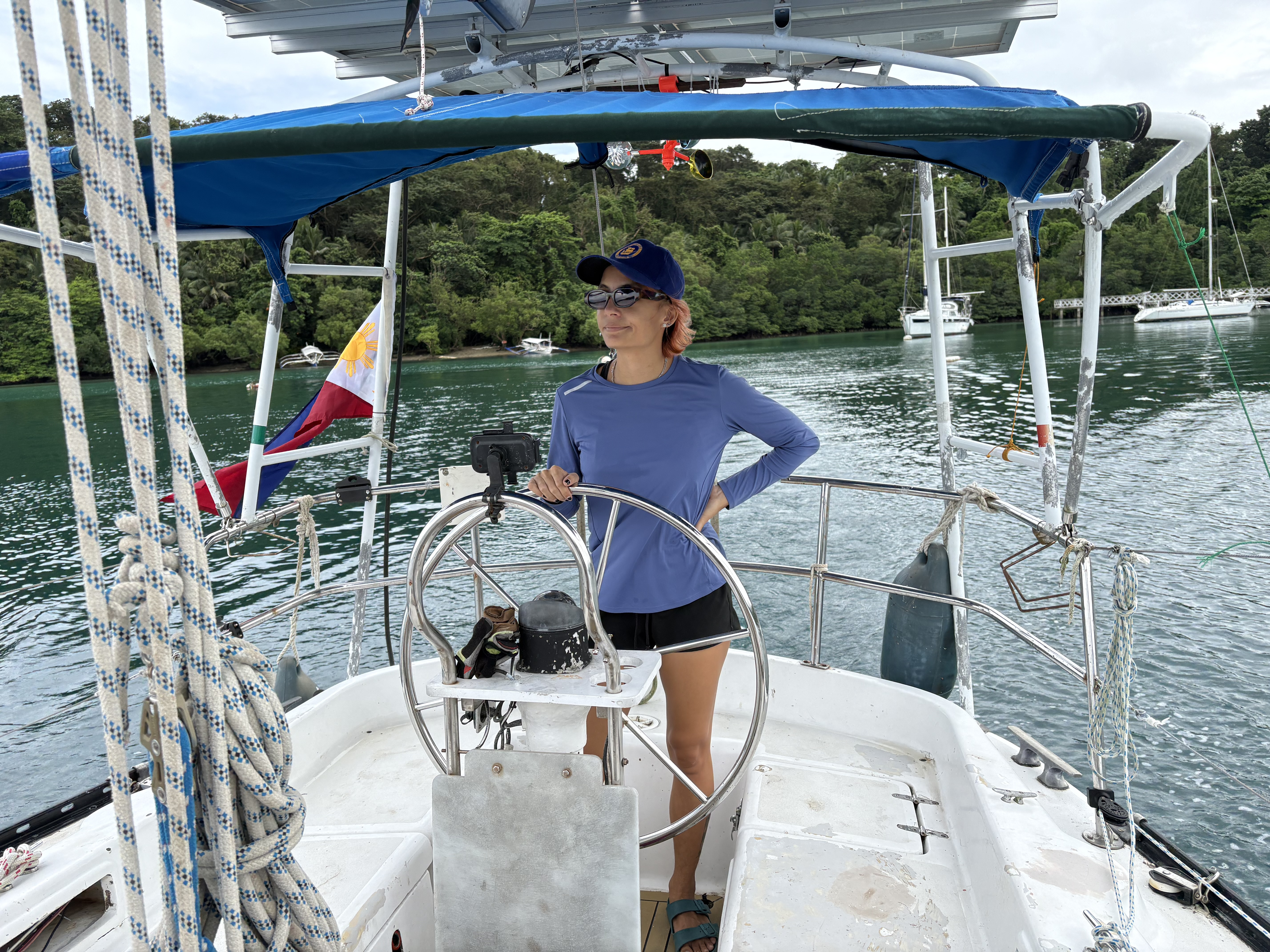
Amihan was blowing from the back and we quickly passed White Beach and then Abra de Ilog. We decided against anchoring at Abra because the wind and waves were onshore and anchoring did not appear save. Instead we planned to go around Calavite point and anchor somewhere on a beach sheltered from the wind by Calavite, expecting to that we could drop anchor around 22:00. This meant sailing at night, but in that area there is very little fishing gear in the water and visibility was reasonably OK with no clouds in the sky. As a concession to safety we lowered the sails and were running with motor so that we could maneuver quickly around any fishing gear in the water if it be needed.
Around midnight we tried one potential anchoring spot that looked favorable on the cMaps chart, but it was very close to a rocky wall with the sea ground getting deep very quickly. It did not appear save. A quick discussion and we decided to proceed and motor overnight.
In the morning we set sail again, but rolled in the Genua, hauled in the main sheets close and motored again, the wind was very erratic with changing direction all the time, with sails only we would not have arrived the same day on Pandan Island.
Almost exaclty 24 hours after detaching from the mooring, at noontime, we reached Pandan Island. Alix had told us to use Rainbow’s End’s mooring, Miriam did, as always, the perfect coil up to the mooring and soon we had our welcome drinks at the Pandan Island beach bar.
Addressing some lack of oversight problems
Martin had made a basic mistake. He had not checked the oil level of the motor before leaving, trusting that it would be all right because the oil was just changed before the All Souls Regatta. When the motor was reved high at a course facing waves at night, the motor was producing some smoke. Checking the oil level showed that it was overfilled. The manual pump for draining the oil was, as so many things on board, unuseable. So improvisation was needed again.
After the maximum level of oil was reached, around one liter had been removed.
For details see Page Motor and Saildrive
Christmas and New Year
The Christmas and New Year parties were typical Pandan Island style. Lots of great food, drinks, gift exchange and games, and big fireworks on New Year. Mavic and the Bruant family arrived after Christmas. In between we had some relaxing beach days and Martin did one dive. Unfortunately we did not go to Apo Reef because a bug went around and prevented some of us from beeing able to equalize.
Sailing back to Puerto Galera
Or so we thought.
January 2, 2026. First day of the journey back. In the morning Martin fuelled up with diesel provided by the resort while Mavic and Miriam went to Sablayan shopping for food. The weather forecast had predicted little wind for the next 5 days, but relatively strong Amihan from East in the North of Calavite until Puerto Galera.
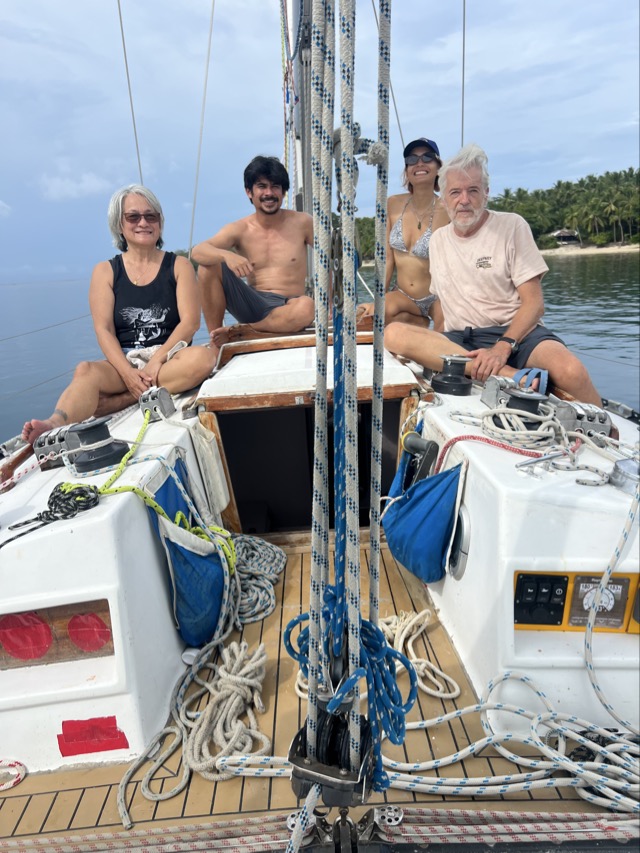
For the following day, with relatively strong Winds predicted from the East in the Calavite Passage over the next two days, we would therefore have to tack all the way from Calavite point to Puerto Galera. But we had 30 horses loaded and lots of fuel. So what could go wrong? But first we had to take the usual year end photo, unfortunately again without Kata.
The crew for the trip consisted of Miriam, Regis, Mavic and Martin.
We left Rainbow’s End’s mooring around 10:00 with no wind, with full main sail and the genoa fully furled out.
But then Amihan picked up. In the afternoon we had similar conditions as last year when we sailed with Naya from Apo Reed to Pandan Island. We put back the first reef in the main and furled in the Genoa 1/2, sailing well doing 6 knots and heeling a lot.
Over the course of the afternoon the wind picked up and we had to reef the main to second reef and furl in the genua to around 1/3rd. We found a nice bay of a fishing village at Igsuso Barangay and decided to stay overnight there.
The bay looked protected on the map for anchoring overnight. While taking in the sails to prepare for anchoring, the motor revs went down and then the motor just died. Darn. Furling the genoa out again to keep control over the boat while rushing to troubleshoot the fuel system at the beginning of darkness. A bit of fiddling with the fuel lines and another try to start – no action. The starter battery was empty. Luckily the emergency switch that connects starter battery and home battery worked. So we could re-start the engine and reach the bay safely. Anchoring on 10 m with 30 meters chain and 10 m rope. It turned out that the wind was still strong in the bay and the anchor slipped. A new maneuver, anchoring on 7m (the chart is very inaccurate, so we don‘t want to risk rocks). The second anchor out in the back to reduce the swinging at anchor, now it seems to hold. A bit of adrenaline rush at the end of the day. We might need to use the little generator to charge the battery tomorrow. Solar panel power is limited.
The bay was supposed to be safe, behind a mountain range, but nevertheless there were nasty gusts all night long. MartinI slept in the cockpit and when a gust woke him, he was checking whether we had changed position with reference to two bangkas on port and starboard and the depth on the depth gauge. Luckily we were safe but he did not get a lot of sleep.
The next day (History does not repeat itself. But it Rimes)
The wind had picked up overnight and we quickly had to tie in the second reef in the main.
Yesterday evening the trouble had started. When anchoring the engine started loosing speed and then died. Some error checking focussing on the fuel lines lead to no insights into the problem. Then the starter motor failed to engage. Turning the emergency switch, which connects starter and home batteries parallel, allowed us to restart the engine. Cause of the problem? Empty starter battery, we thought. But then the battery indicator light at the engine control panel was on for some time indicating problems with the alternator. The charge relay obviously did not work either since, if it would, the solar panels would also have charged the starter battery. Or it just provided too little current to charge the battery.
We still continued because we have the little generator which we could use to charge the starter battery. And the emergency switch. Since we only have lights and two fans on the home battery, its SOC so far was always over 95%. 140 Ah home battery vs. 70 Ah starter battery plus solar charging. Should be all right.
But unfortunately that was not the only problem. There also still seemed to be something wrong with the fuel supply. Either sludge accumulated during the years, or from dirty fuel. At low revs the engine worked for some time, at higher revs it cut out often.
Before reaching Calavite Point, at Pamutusin Cove, we had very strong wind with lots of gusts, putting a lot of strain on the main (with 2nd reef) and on the genoa, (only 1/4 out). After passing Calavite Point we hit even stonger wind and gusts and then, when trying to furl in the genoa further against strong resistance, it ripped apart in the middle. Now we had only the main sail and a faulty motor left. After beating against the wind for around 30 minutes with the reefed main only, and making almost no height, we decided to turn around back to Pandan Island. Martin decided to stay there to get the motor fixed and organise the repair of the genoa or even a new foresail, while Mavic, Miriam and Regis went back to Puerto Galera by bus and picked up the car to bring it to Subic. Martin hoped that he will not have to stay for 3 months, as Miriam had to with Magayon II several years ago.
Regis and Miriam were having fun of a lifetime because it was sailing pure. Martin was thinking about spare part supply chains, or the lack of those. 🤣
After a bit of experimenting we found the reason for the engine always loosing power and stopping. Sludge in the fuel tank. Lots of it. Clogging the outlet hose in the tank and the fuel cock.
Using an improvised hose going directly into the tank through the level sensor opening and stopping 5 cm above the bottom made the engine run smooth, at least for a while. We hoped it would last until Pandan Island. In the meantime it was dark and we were scheduled to arrive there around midnight.
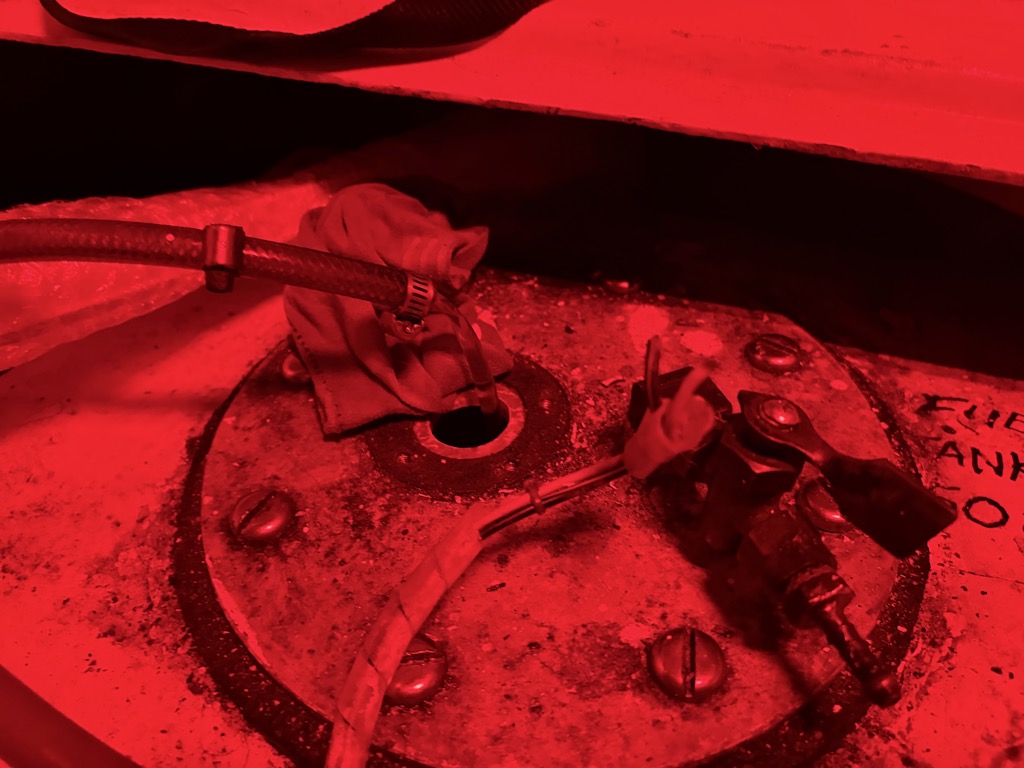
On the way back we had the wind from port, still quite strong but most of the time manageable with the reefed main alone. When it got dark and we were close to a shallow area off Mamburao we started the motor and took in the main. Again, the motor died several times, we then cleared the fuel outlet of the tank repeatedly and started it again. This took its toll on the house battery, around 22:00 it was drained and would not crank the motor anymore. We now relied on the main sail only. What made things worse was that in the meantime we had gone very much off land, if we kept the course we would have to tack back against the wind, impossible with only the reefed main sail. Miriam did a great job for several hours to get as close to the wind as possible, beating against the waves, with water coming over the deck many times (during which we found out that the saloon top hatch is also leaking big scale). To get one more engine start power into the batteries, Martin pulled out the little generator and connected it to the shore power lines. For around an hour he was holding the generator firmly in place on the heeled deck while holding on to winches for stability, putting around 0.12 kWh more juice into the batteries. Not a lot, hopefully just enough for one more start.
Some time after midnight we then got close enough to the land to make it to Pandan Island without tacking and in relatively calm waters. We have never been as happy as when we saw the lights of Sablayan come up at the horizon. We got close to the island at around 1:30.
We assumed the worse case scenario, that the engine would not start for the docking maneuver. So we had one go to try it under sail, if we missed it we would have to sail out to the open sea and then stay there until daylight and then try to organize a tow. Karla was at Apo Reef for an overnight dive trip, so she was not an option before she came back in the afternoon. She could probably pick us up on the way back floating somewhere between Pandan Island and Apo Reef. Karla had towed three big dive boats that ran into engine problems in the last week, so considering those boats was also not an option. The cost guard only has a small RIB, not suitable for a tow.
For the mooring maneuver we came up with a plan with 4 staggered options in case some went wrong.
- First try: We sail with the main sail to Karla’s buoy, coil up to the morring, and dock catch it with a standard mooring maneuver under sail. Once at the mooring we release main sheet and drop the main immediately, but are ready to raise it in case we need to go to the next Rainbow’s End’s mooring.
- Second try: In case we missed the mooring but we are close, Regis to jump in the water with a rope attached to the boat, and attache the other end quickly to the mooring line.
- Third try: Drop both anchors at mooring depth (15-20m).
- Fourth try: Repeat at the more downwind mooring of Rainbow’s End, any of the above that are feasible.
The we prepared the boat.
Miriam was on the helm, Regis at the bow with gloves, boat hook, anchor and additional lines, Mavic on deck with a flashlight to help finding the mooring lines and Martin took care of sheet and halyard, and anything else that might appear. We were ready, in the worst case we would visit the house reef for a second time.
Regis had contacted Alix on Pandan Island once we had cellphone reception and explained the situation. Both moorings, that of Karla and of Rainbow’s End were available. Gael had grabbed a fisherman with his small bangka and was waiting at Rainbow’s End’s buoy to assist us in docking.
Alix and Gaz were on the beach with flashlights. Gaz said later he also had developed 4 options to assist us.
Luckily the wind was significantly weaker and the sea was much calmer in the channel between Sablayan and Pandan Island. We approached under sail, were able to start the engine a few hundred meters off the moorings and Miriam steered the perfect maneuver to Karla’s buoy. Martin dropped the main sail. Easy. Save. But better to have contingency plans and prepare for them, it could have been tricky if the motor had not started.
Our original plan was to sleep on board and sort out next steps the next day, but the Gael in the fishing boat took all crew except Martin on land. They found a space to sleep at Gael’s room and in the massage area.
A new plan
January 4.
From the Skipper’s log:
The first thing was to move IRResistible from Karla’s mooring to Rainbow’s End’s mooring, around 120 meters further West, because Karla needed its own mooring when coming back from Apo Reef. Since the motor was no realistic option, either not starting or potentially dying when very close to the Pandan Island house reef, we tied all four spinnaker sheets plus another long rope together. Regis then swam to the other mooring with the rope, attached it, and we then released Karla’s mooring and hauled the rope in and safely moored at Rainbow’s End’s mooring.
This time I am staying on Pandan Island with the boat. I plan to fix the alternator and clean out the fuel system. Always look at the bright side of life: This way I have the chance to meet Pete and Aileen (arriving tomorrow) and Reiner and Biggi (arriving on the 8th).
Mavic, Miriam and Regis left yesterday, picked up the car in Puerto Galera and are now on the ferry. They took the torn Genoa with them. Luckily only the seams seem to be broken and the blue UV protection needs replacement anyway. So we probably can fix it. I already contacted Hyde Sails in Cebu for info on repair. If they can do it quickly it should be possible to get the sail back before the end of the month. If Hyde can not do it we still have the option of our SailRite.
Miriam plans to celebrate her Birthday on Feb. 1 on Pandan Island. So after that we can then sail back to PG, either via Calavite again if the wind is calm or around the south tip of Mindoro.
New deadline for sailing back: February 2.
I will go to Cavite for the awarding of the BsC scholarship awards at Girls Town for a few days around January 14, and then also pick up the anti fouling from Island Paints in Cavite, then go back to Pandan Island to fix the new alternator, which will then hopefully be handcarried to the island by Willi and Klaudia. Go to Subic a week later to organise haulout and some other things, and back to Pandan Island for Miriam’s Birthday. After that we should be able to sail her back.
Inquiries at Watercraft had in the meantime provided the bad news that without registration and insurance there was no way to enter Subic Bay and have the boat hauled out at Watercraft. We therefore decided to go to PCYS in Papaya Cove. The quotation was cheaper than that of Watercraft. The disadvantage of PCYS is that it is far from everywhere. If a part needs to be purchased it would take several hours drive to Manila to purchase it. Also, from Subic it is a 4 hour drive. Martin inquired whether PCYS has a technician who has experience with replacing the diaphragm of the SailDrive, the answer was negative. Their mechanic has moved to another boatyard. That is another downside of PCYS.
Observation: More engine trouble
From the Skipper’s Log:
On January 6 I join a dive trip to Apo Reef. On the way back there are two large diving bangkas floating powerless around 40 minutes off Sablayan. One had engine trouble and was given a tow, until the engine of the towing boat also failed. Karla picked up their line and we did a slow speed detour dropping the two boats at Sablayan port. On January 11 Karla gave a tow to one of the, boats again with engine trouble.
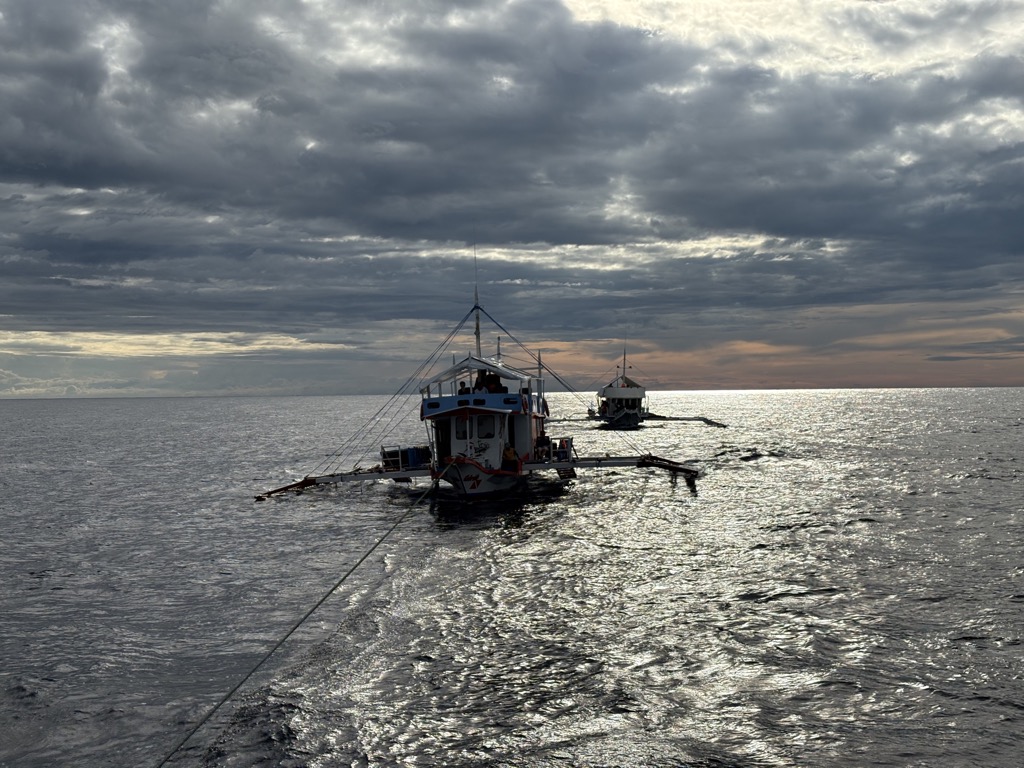
Two days later another dive bangka had motor trouble and temporarily moored in front of the island waiting for a tow. I wonder whether there is something wrong with the Sablayan Diesel.
Repairs
Destined to stay on a tropical island, which in the meantime has good internet access, for organizing repairs was not too bad. The three priority areas for repairs were: 1.) Alternator, 2.) Fuel system, and 3.) Genoa. A minor problem developed when the port side China-made Navigation light bought on Lazada broke and only green (starboard) and white (aft) remained. As a first action we left the saloon lights one at night so that the boat could also bee seen from the port side. An order for Hella lights was sent to SVB to be shipped to Mathias’ place for him to bring together with other boat items.
Fixing the Genoa
An inquiry at Hyde Sails in Cebu about the possibility to have the Genoa fixed before the end of January had came back with positive results. Miriam and Mavic therefore took the torn genoa to Subic and shipped it via LBC to Cebu. It took 10 days for the sail to arrive at Hyde Sails instead of the 5-6 days advertised by LBC. Despite Hyde Sails team being busy with measuring out sails for other boats and with fixing other sails, their repair department managed to fix the sail within two days. The total time the sail stayed at the factory was one week. The sail was then shipped directly to the Sablayan LBC office and this was also delayed and took another 10 days. The repaired sail was available on January 31 at the LBC office in Sablayan. Mavic and Martin picked it up in their outlet by tricycle because they only had motorbikes for delivery to Denis’ house, and it was too big for a motorbike.
Martin had also inquired parallel whether we could borrow some other foresail from another boat or from the Puerto Galera Yacht Club. Some members were extremely helpful, a matching sail from Rags, anohter boat, was identified and arrangements made for getting it to Sablayan. It would have taken some time and the repaired Genoa arrived before a potential date for a handover of the sail. So that Plan was abandoned, but many thanks to Allan from the club and the owner of Rags for the help. Highly appreciated.
We mounted the repaired Genoa on February 2, after Mathias had arrived to help sailing back and with repairs. The crew for sailing back consisted of Miriam, Aileen, Mathias and Martin. But when testing the repaired sail the furler got stuck halfway and we could not let the sail out or pull it in any further. Even brute force would not help it. Martin was towed up the mast to check whether the furler got stuck on the top, but it was all OK there. So we had no choice than to take the genoa off again and check for the error. After taking the furler apart it became apparent that the lower disk, consisting of two halfs that are joined with small screws and nuts embedded in the plastic, was broken, had expanded and blocked the furler.
This finding put a different light on the reasons for tearing the genoa apart. The furler had probably already stuck when we attempted reefing and the process took too long until the sail was damaged.
So sailing to Papaya Cove via Puerto Galera had to be postponed again, which meant Miriam and Aileen would not available anymore for the cruise to Luzon since they had other commitments later that week.
For being able to use the sail on the way to Papaya cove, the furler had to be replaced or repaired. Getting a spare part would take many more weeks, so for now we decided to do an emergency repair in Mariposa’s Workshop. A shopping trip to Sablayan resulted in a stainless steel kitchen cuttlery for making a metal bridge and in matching screws.
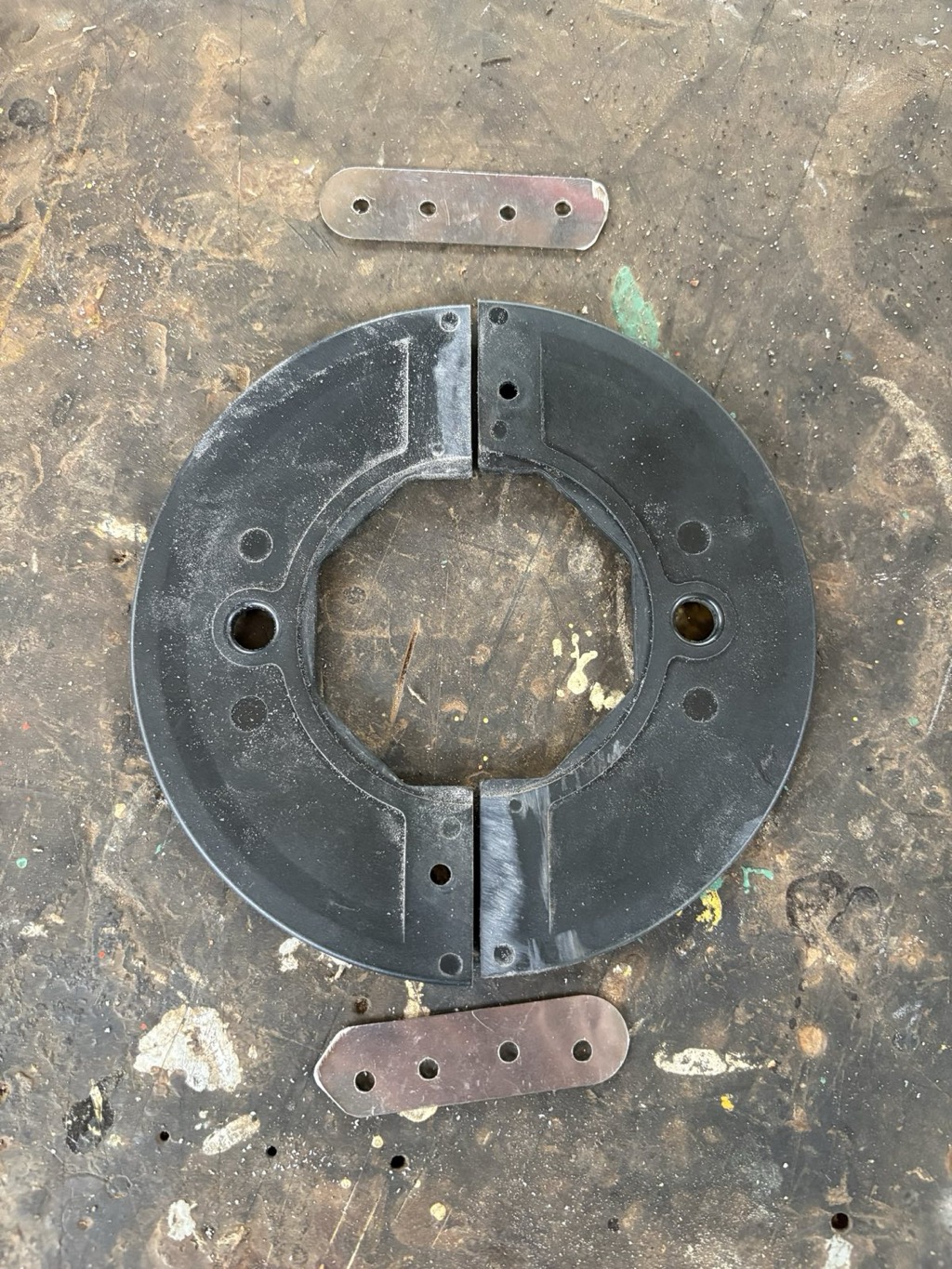
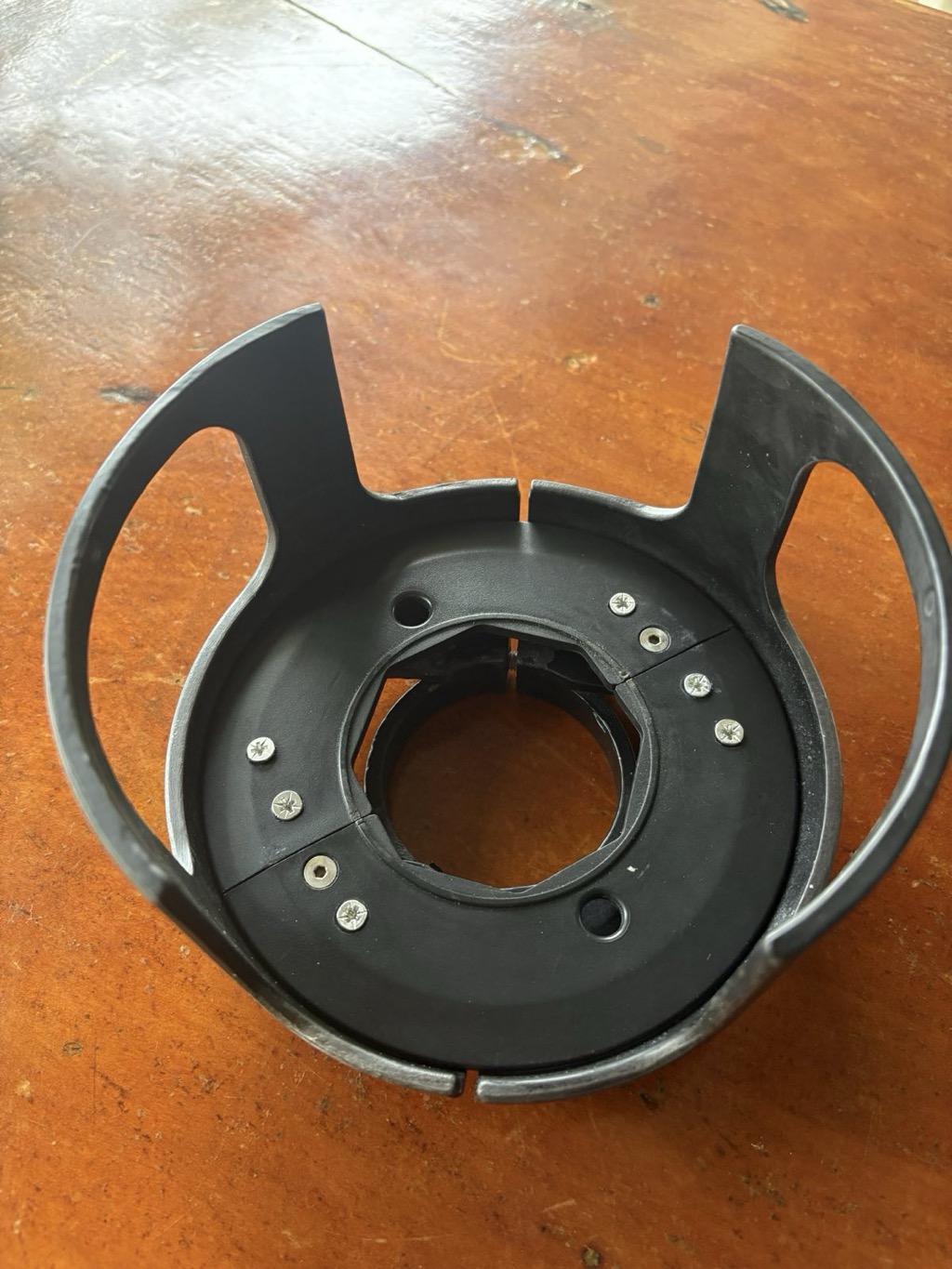
On February 9, Mathias and Martin tested the repaired and re-assembled furler and Genoa on a short sail between Pandan Island and Sablayan. It worked well. So on theory all was set for the trip to Papaya Cove (see further down).
Two Alternators
Martin removed the alternator with some bad guts feeling, now we could not run the engine in case of emergency because the sea water pump is driven by the same fan belt. But the alternator needed to be fixed. Funky had a look at it in the workshop of the Mariposa Dive Shop. It was impossible to open it up because the screws were quite corroded. Noel then took it to Sablayan to the car electrician that also fixes Karla’s alternator when needed. Two days later the diagnostic report came in, the IC of the internal regulator was broken. It is not available in Sablayan and the shop recommended to convert the alternator to be used with an external regulator. Martin did not like that optoin because it would add complexity in the motor compartment. He asked Noel to wait and ordered an IC in the internet to be sent to our address in Germany. This was for backup Plan B. Mathias later brought the IC and we got the repaired alternator just before the deadline.
Compatible alternators found in various boat supply web pages showed that new replacements cost between US$ 450 and 1,200, plus shipping. SVB in Germany had one for 195 Euro. A quick communication with Willi and Klaudia, who were scheduled to come to Pandan in a few days, led to Plan A: Purchase of a new alternator in Germany, shipped to a German address and hand carrying it to Pandan Island.
All worked out well, after temporarily removing the rust from the pulleys, I fitted the new alternator and we now have the repaired one as spare.
For details see: Motor and Saildrive
The messiest job ever
The boat has two diesel tanks. One with 50l and one with 60l capacity. In recent times only the smaller one was used, the 60l tank was almost empty. Removing the aluminium cover on the top of the fiberglass tank showed that there were a few liters diesel inside but they were heavily contaminated with sludge. I had no choice than to clean it manually. It was some job, nothing that you want to do again.
Check details at Page Motor and Saildrive
Sailing back, attempt no. 2
February 5
The crew consisting of Miriam, Aileen, Mathias and Martin boarded this morning to sail to Puerto Galera where Aileen and Miriam wanted to attend a party scheduled for the weekend. Everything went well, until we tried to roll out the Genoa. It went hour halfway and then got stuck so badly, that it could not be rolled out in or rolled back in. We had to take it down again and diagnosed a broken furler mechanism (see above under “Fixing the Genoa”. This would take a few days to either get a spare part or to try to temporarily repair the furler.
Sailing back, attempt no. 3
February 10
After having tested the repaired furler and Genoa, refuelling, fixing of the entangled lazy jack, and purchase of supplies on February 9, we thought we are now ready for another attempt to sail back. This time the crew would be Mathias and Martin.
The weather report had predicted almost no wind for the area west of Mindoro and winds of 12-15 knots in the Calavite Passage for the next two days. Succeeding days stronger winds again. This seemed to be the the ideal window with little wind we were looking for.
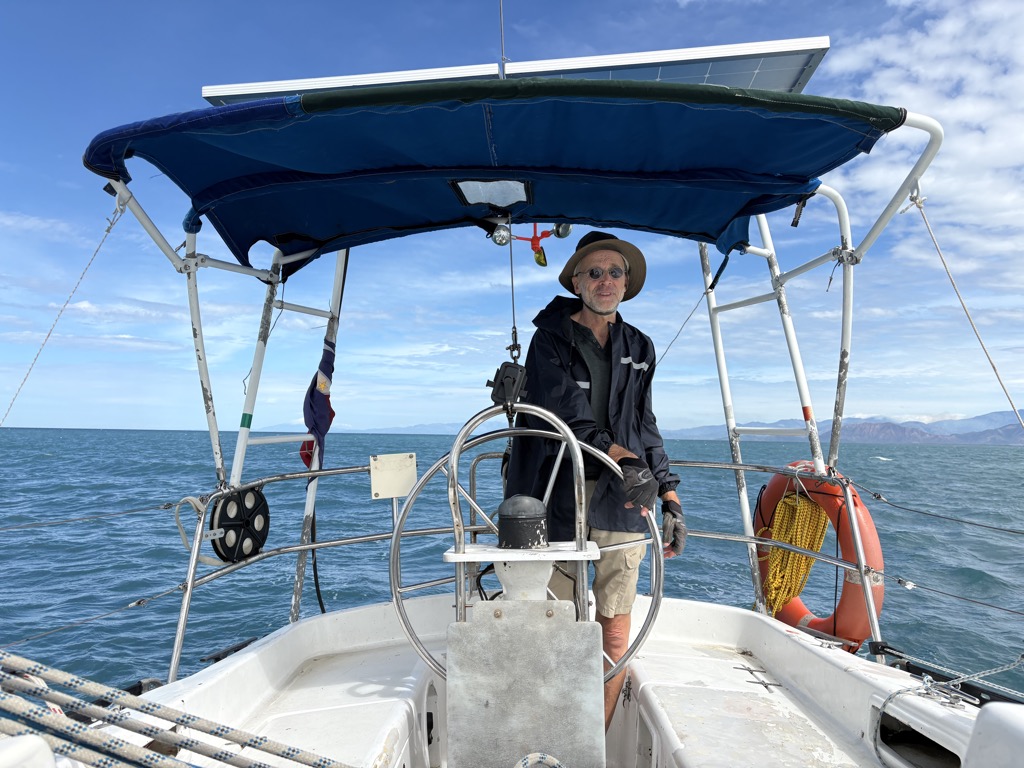
With almost no wind we set sail in the morning of February 10 and set the course north towards Calavite point. With initially only the main sail set and running under motor the boat sailed well. Just an hour later, around 5 nm north of Pandan Island, the wind had picked up considerately and we could kill the motor and furl out the Genoa. But soon after we were hit by gusts with 35 kn windspeed. The boat still sailed well but it was already hard work and water was constantly coming over the bow and soaking us. We had to put the rain jackets on. While it was fun sailing, the prospect of a lot more wind in the Calavite Passage and at least 2 days beating against wind and waves, and constantly being soaked was not a very tempting one. After some more time and deliberations we therefore decided to turn back to Pandan Island.
A decision to wait it out
There is really no reason to force it. Martin is semi retired and does not have any fixed in the next two months. So rather than forcing it, we can just park the boat at the mooring of Pandan Island and then sail back later. This would also allow to follow-up on the boat registration and to try to get permission to get into Subic Bay for haulout at Watercraft. Right now the plan was to go to Papaya Cove because of the lack of a valid registration and insurance made it impossible to enter Subic Bay legally.
Killing a corral reef
April 11.
In the meantime the Amihan season is over, there is very little wind and no rain. So hopefully the right time to sail back. The boat is now also registered and has insurance. Entry permit to Subic Bay is being processed, so we can actually now to to Watercraft. Twenty minutes drive from home, the boat supply shop Aquaventure close by and more access to a mechanic for the SailDrive if that is needed. So waiting things out made sense. The only downside now is that the haulout fees will been increased by around 30% due to the mess Trumpfikistan is creating in the Middle East. But that additional cost we’ll save in car fuel.
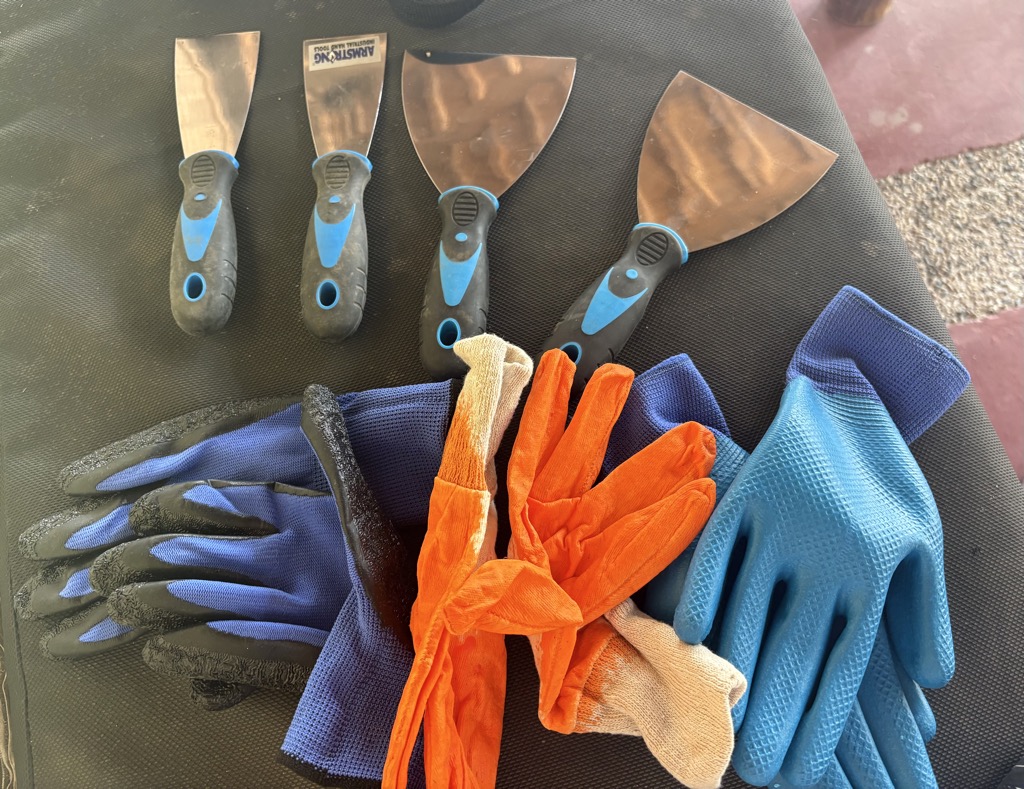
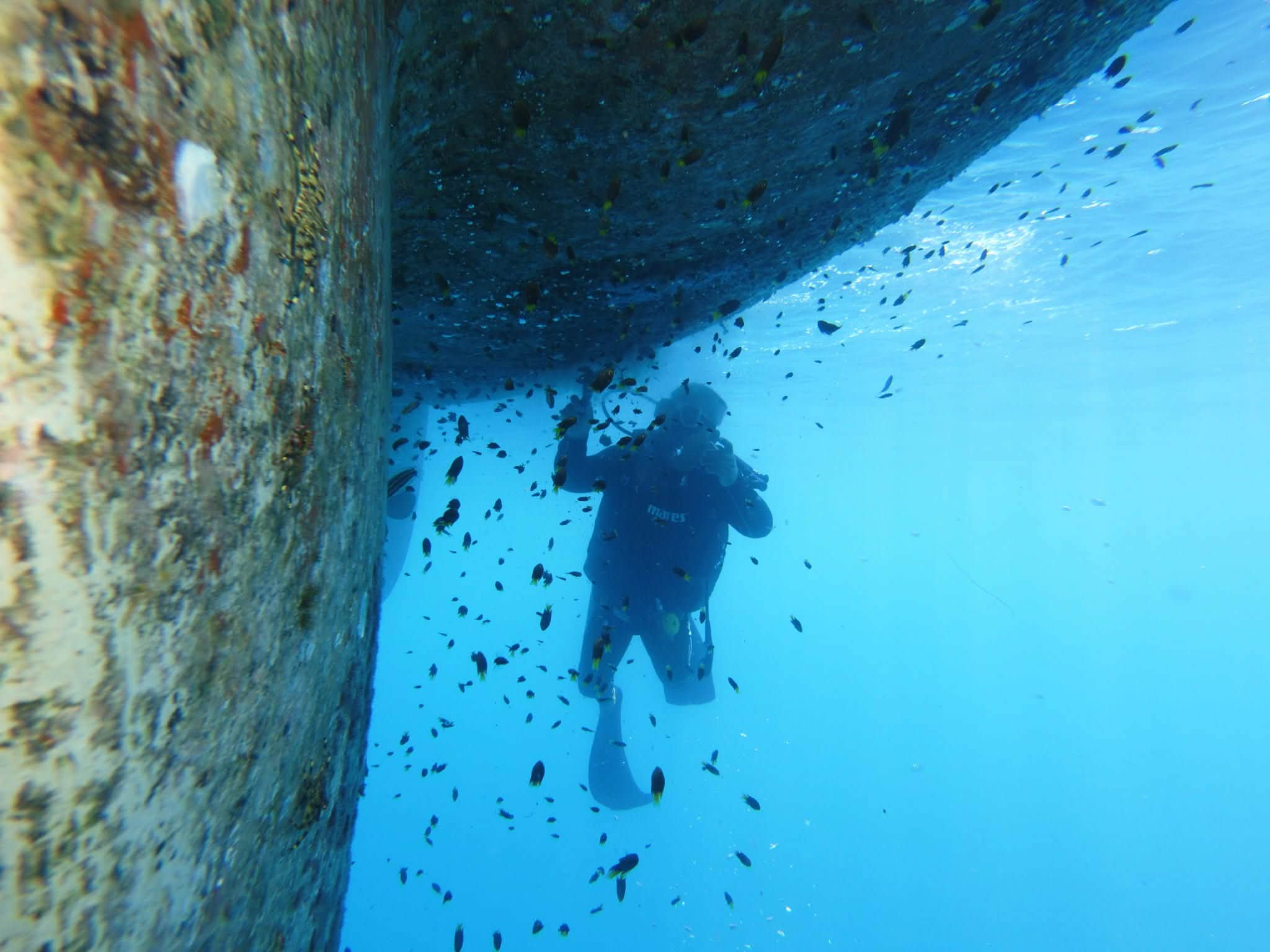
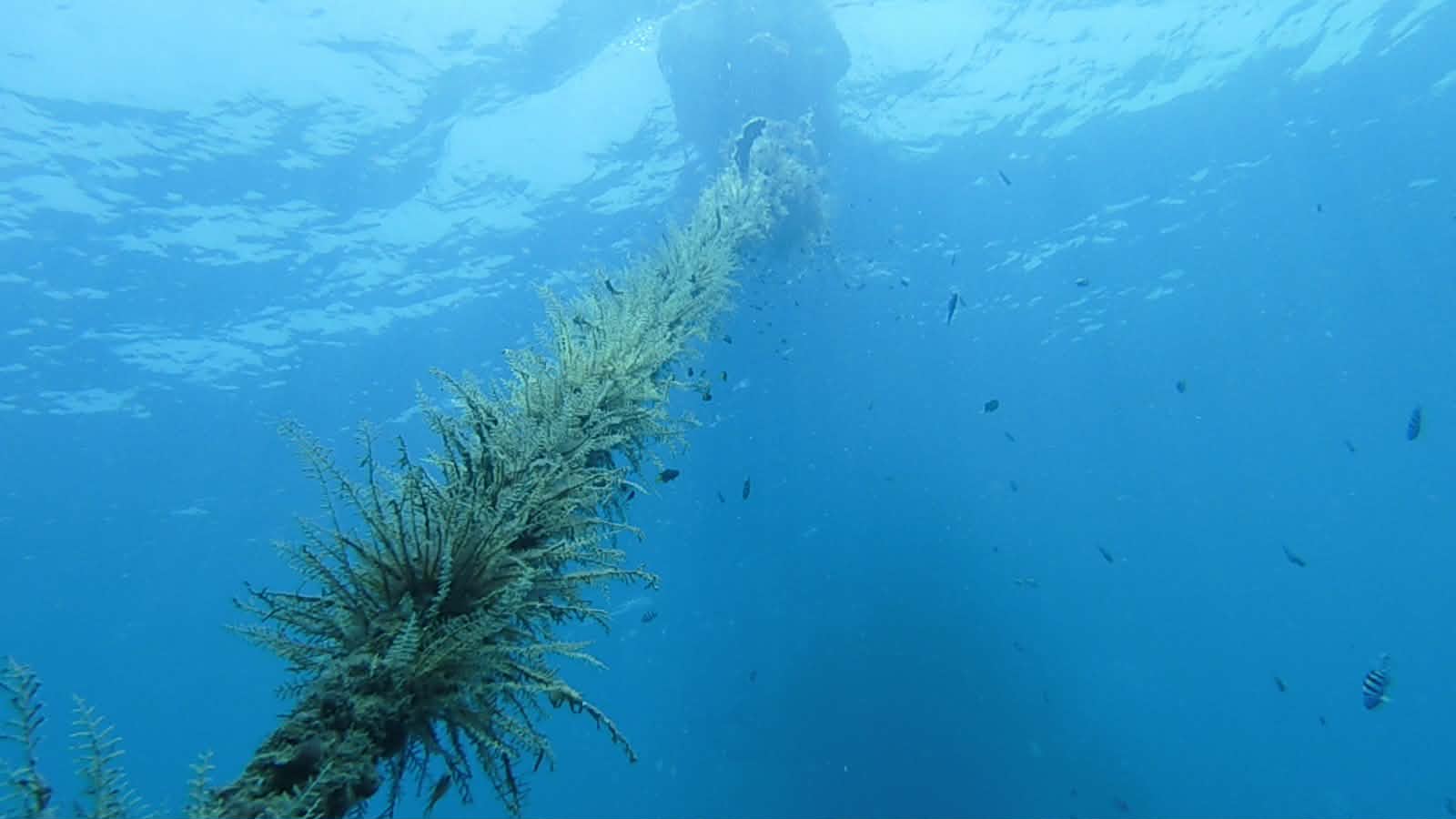
Yesterday Martin had gone shopping to Sablayan, coming back with 5 sets of heavy duty rubber gloves and 4 spatulas. This morning Mavic and Martin got scuba dive gear from Mariposa and together with Alix swam out to IRResistible and started scraping of the underwater marine ecosystem from the hull. No antifouling for at least 10 years allowed corrals and barnicles to grow without much restriction. Before regattas they had been scraped off by a diver in Puerto Galera, the last time for the All Souls Regatta in 2025, but regrow is amazingly fast. The gap between the rudder and the hull also served as home for several crabs. When the tanks was empty most was cleaned, but one more dive tomorrow would be useful. We’ll have little wind and limited amouts of fuel and would like to be as efficient as possible.
Alix said he cried when scraping off all the corrals. He is thinking about buying an old boat and attaching it to the morring just for creating another floating reef.
.jpeg)
.jpeg)
Sailing Back, Attempt No. 4
April 14, 2026
We, Miriam, Regis, Gael and Martin, get shipped out on the little service boat. We detach from the mooring at 10:00 as planned, move out under motor and set both sails. Under sail we make 5.5 knots, hopefully the wind will stay favorable. We do have 60+15 liters of diesel plus two additional 30 liter tanks from the resort in case the wind drops and we need to motor all the way. Given that the Philippines have declared an energy emergency, it might be difficult to re-supply on the way using jerry cans.
Regis is using an App that optimizes courses based on distance, current and Wind predictions and the fastest course would be tp pass the Lubang Islands on the starboard side, going out into the West Philippine Sea and them straight to Subic on north-easterly course, and not hugging the Luzon coastline. A bit more risky, and requiring overnight sailing, but the advantage is that we can do it in two instead of three days. Since the journey got delayed several times and Martin has a consulting assignment upcoming, that is not a bad thing. Miriam however regretted not having the chance for breakfast in a nice bay in the morning.
We forgot to bring ice for the cooler, so we only have two warm cans of San Miguel Pale Pilsen and around 12 cans of San Miguel light. This constitutes a crisis. The boys organise an emergency delivery of cool beer and ice through Ben, who is also leaving for Subic with his speed boat today. SInce we have never heaved to with IRResistible before, we do three practice runs to not look incompetent when the delivery arrives. It works out well and only 15 minutes later a small blue spot appears South. The Cooky Monster gets bigger quickly. Once it reaches our heaved to boat, Gael jumps in the water and swims over to receive the cooler, jumps back in and the first crisis is addressed properly. Cookie monster accelerates and disappears to the North.
After seeing a school of dolhins jumping in the distance, we reach the Calavite peninsula, this time without problems, around 15:00. After passing Calavite Point marked by the light tower, we leave the protecting coastline behind and start the crossing to the West tip of Lubang. In the meantime it is dark, the waves are building up through the passage and the wind is consistent. Towards Lubang there are a lot of lights, fishing boats trying to attract squid, and unfortunately we have new moon, so visibility is not that great. The crew is fully allerted and scanning the dark in search for fishing gear in the water, until we safely leave the boats behind us.
At some point the engine starts to make strange sounds. On checking, there is no cooling water coming out of the exhaust. Again, the same happened when we test-sailed the boat in Puerto Galera last year. And again, error checking at night – in the dark, with flashlights only. We try error checking by elimination:
There is no water in the seewater filter. Filling it up with a bucket and re-starting the engine – water comes from the exhaust. So the impeller of the water pump is not the reason.
Luckily there are many hoses of different size on board. With a bit of electric tape to increase its diameter, one fits into the inlet and outlet tubes of the seawaterfilter tightly. A large sringe used for sucking out excess engine oil before produces overpressure and underpressure. The outlet tupe leading to the water pump is clear, water moves in both directions. The inlet tube is different. Pushing water in works, the syringe empties. Sucking water out does not work. It performs like a one way valve. Maybe some residues from cleaning the bottom hull two days earlier went into the inlets.
Or maybe one of the many plastic bags polluting the sea here has wrapped itself around the SailDrive shaft and is blocking the inlets. There is only one way to eliminate this option. Heave to and jump in the water. Gael volunteers. We take fins and mask out of the locker seat and get the waterproof light. A brief discussion, there is actually enough wind to sail, with the reefed genoa only it should be safe at night. So we postpone the checking to after sunrise, when there is more light. All the gear goes back in the locker and we set course towards Cabra Island. Martin takes over the helm while the rest of the crew take well deserved naps. An hour later there is a large fish jumping on the starboard side. Then there are many bodies, very close to the boat, dolphins? But no sounds of breathing, so maybe, maybe not. They are around for about 2 minutes, and then disappear.
South of the channel between Cabra Island and Lubang the wind picks up a lot. Funnel effect. At the same time the boat does not seem to make much distance. Despite speed through the water seems to be around 4 kn judging from the bubbles. Strong current from the front?
Miriam comes up when Cabra Island and takes over the helm, after passing the beacon positioned on the West tip of the island we can change the course towards our final destination, Subic Bay. 50 nautical miles open sea to the entrance of the bay and 7 nm to the port.
Sunlight. We briefly heave to again and Gael checks the openings at the saildrive. They are clear. What the heck is the cause of the problem? Anyway, wind is good and we can sail 4-4.5 kn with the genoa alone. Later we also raise the main.
We cannot enter the bay and get to the port with sails only. So we need to have way to use the engine, or organise a tow. We have lots of water in 5l bottles on board and using the styrofoam cooler delivered by Cookie Monster as a tank, which we connect to the outlet hole of the seawater filter, we come up with a plan. One of us would sit down in back cabin and make sure that the water flows and to refill the “tank” when needed. Another crew would refill the emptied bottle on deck with sea water and carry it down. One at the helm and one for catching the mooring. We start the motor to test the idea and water was indeed coming out of the exhaust. So we have a plan.
When we approach Subic Bay the wind drops, almost stops completely. This is the time of the day where it usually stops and then comes back from another direction. No way to continue sailing. We start the motor – despite the system described above, second only to the Apollo 13 fixes that brought their crew back to earth, there is no water coming out of the exhaust. In addition the engine makes squeaking noises again, maybe from the new alternator. So we can only sail. What do we do now? Get a boat to give us a tow. There are a few small fishing bangkas out here, but out of talking distance. Gael tries in vain to get one’s attention. But then the wind picks up a little bit and gets us closer to one of the small boats. Gael manages to communicate with the fisherman and let him know that we need help. His boat is anchored and he needs some time to raise the anchor. He agrees to follow us into the bay, for now the wind is moving us into it at low speed.
When he catches up with us Gael explains to situation in Tagalog, offers to pay for his fuel and his lost catch, and another plan is formed. We lower the sail at Grande Island because from there we would have to tack against the wind. Regis hops into the bangka with our tow line and then the little bangka with its single cylinder motor with not more than 8 horsepower starts the long journey through the bay, towing us with around 2kn. Amazing. Also amazing that the fisherman actually has enough fuel on board for this long extra trip.
In the meantime Christopher explores different options in Subic where we could leave the boat for two nights until the booked haulout day. The Lighthouse. Parallel to a boat at a boat warf, or the pier of Bay Marine Subic (BMS) at Vasco’s. We end up choosing BMS because it seems to be the easiest given our problems with maneuvering. No wind and no wave at the pier at Vascos and Christopher is on the pier to help us with the lines. Around 20:00 the boat is secured, the personal belongings taken off and we celebrate the success of this attempt to sail back with a few glasses of cider at the Vasco’s restaurant.
The Haulout
The next day Martin organised the haulout with Watercraft, and requested for a boat to tow IRResistable from BMS to Watercraft.
A postive surprise waits for us. Greg from BSM waives the mooring fees because he fondly remembers IRResistible. According to him he did one of his first open water sail on this boat. He said he heard rumors that the boat would be brought on land and converted into a bar.
The haulout worked well and was done within 2 hours.
Martin had planned for two weeks, but the last three months have reminded him that a lot of work needs to be done on the boat, and that that is better done on land. For convenience mostly, once the underwatership is done. Fixing things while the boat was at the mooring in Puerto Galera was a logistical nightmare.